See how Opendate can help you manage the entire event lifecycle.
Let us know who you are to unlock the demo video.
Thank you! Your submission has been received!
Oops! Something went wrong while submitting the form.


Most venues aren't waiting on AI. They're already using it.
When we asked operators how they'd describe their organization's current use of AI, 67% said they're already experimenting with ChatGPT or Claude for chat and copy creation. Another 28% are using AI for reporting and data analysis. Only 22% said they haven't started yet.
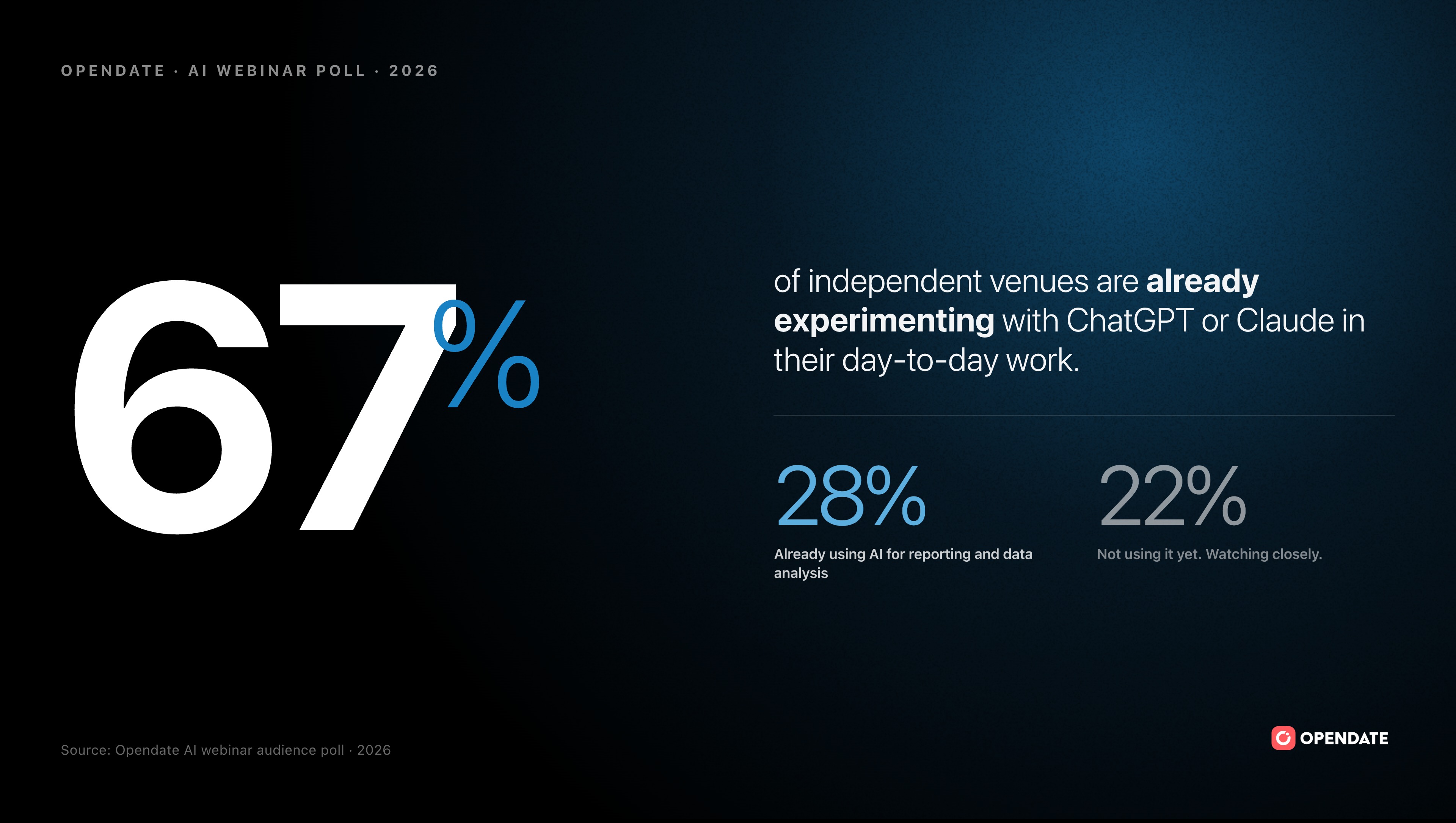
That tracks with what we've been seeing across the Opendate customer base. The conversation has shifted from "should we?" to "where do we point this thing?"
Asked where they're most interested in applying AI, the room split:
Marketing edged out operations, but they're effectively neck and neck. Together, nearly three-quarters of venues are focused on those two areas. That makes sense: marketing is the most public-facing problem, and operations is where the daily friction lives.
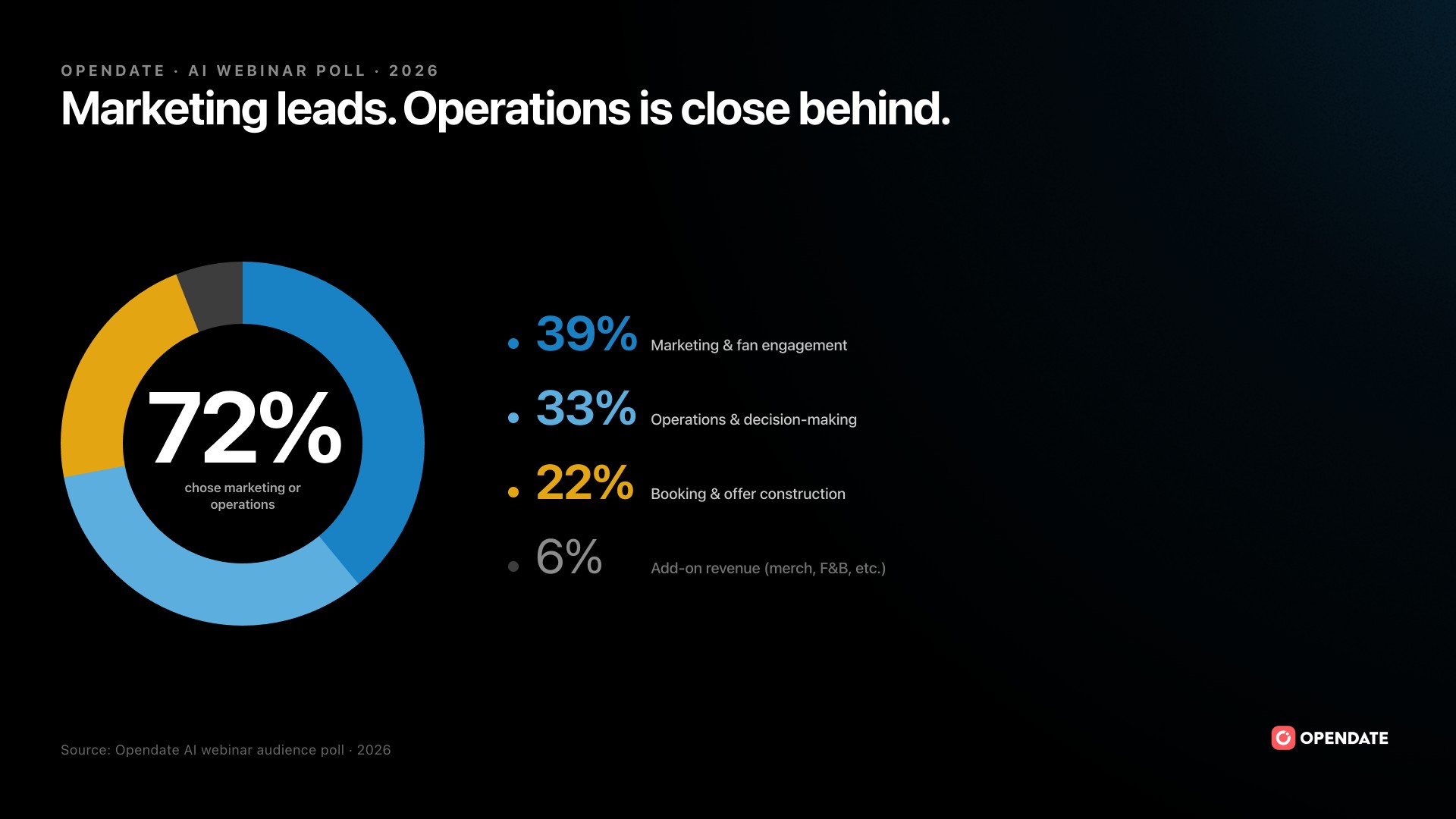
The interesting outlier is add-on revenue. Almost no one is thinking about AI for merch, upgrades, or F&B — which probably means there's whitespace there for venues willing to look.
Here's where it gets interesting. When we asked what's holding teams back from doing more with AI, 62% pointed to one of two things: "skills or staffing" (31%) or "knowing where to start" (31%).
Cost? 8%. Buy-in from leadership? 8%. Data quality? 8%.
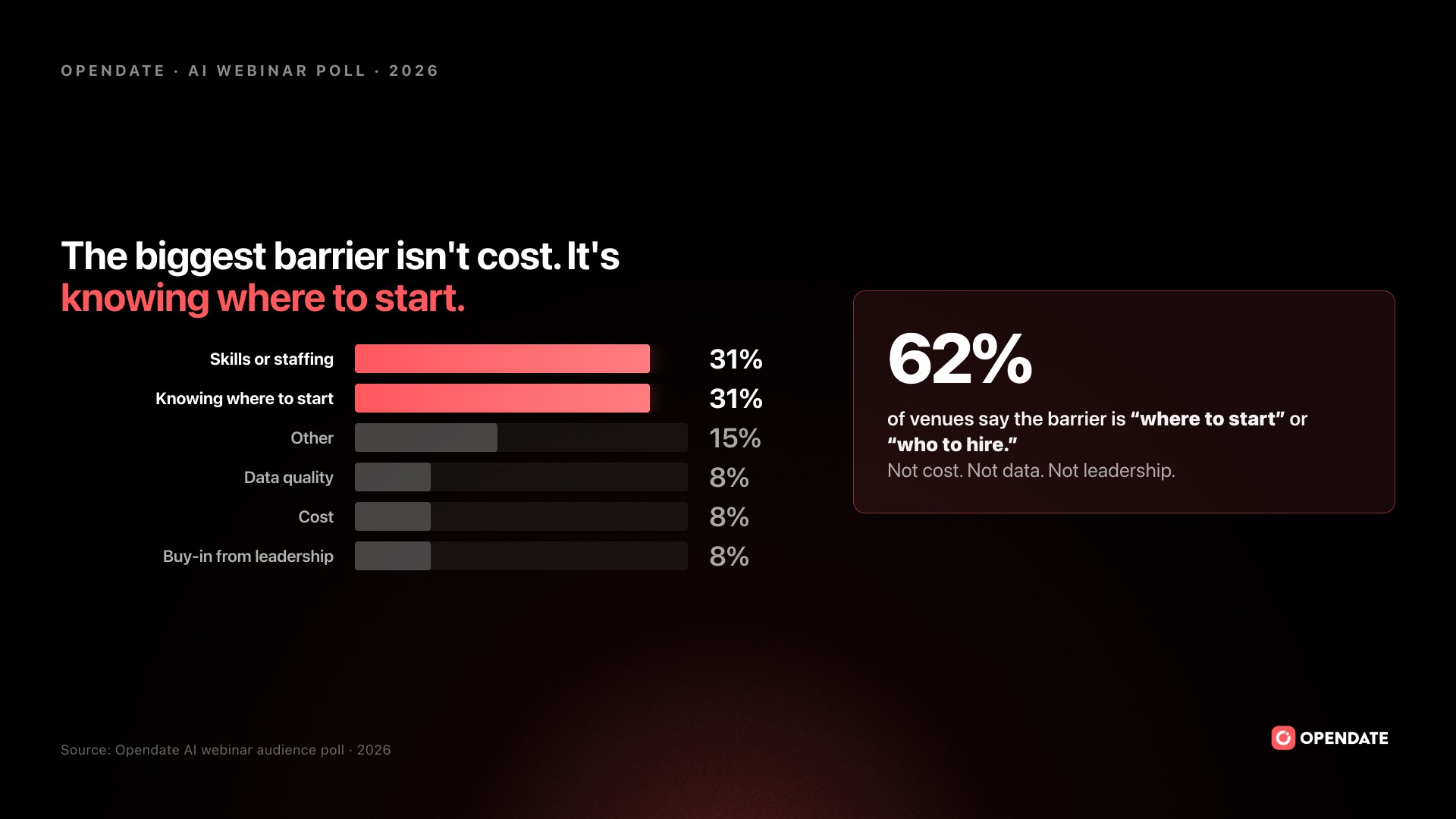
Read that again. The barrier isn't budget. It isn't politics. It isn't even data. It's the simple fact that most venues don't have someone whose job it is to figure this out, and they don't know which thread to pull first.
If you're a venue operator reading this and nodding, you're in the majority.
The most revealing answers came from the open-ended question: If AI could solve one problem at your organization tomorrow, what would it be?
Three themes emerged:
Data wrangling. Multiple operators mentioned reporting, sorting through historical data, and just getting their numbers organized. One put it bluntly: "Data organization and reporting."
Driving demand. Another cluster wanted help filling rooms. "Get more butts in seats." "Drive more ticket buyer and private event booking traffic to the website." "How to reach music fans out here in the suburbs?"
Operational drag. And then there were the answers that got the biggest laughs in the chat. One operator wished AI could "pull stuff from emails automatically (thus reducing how many emails I need to open)." Another just said "saving money."
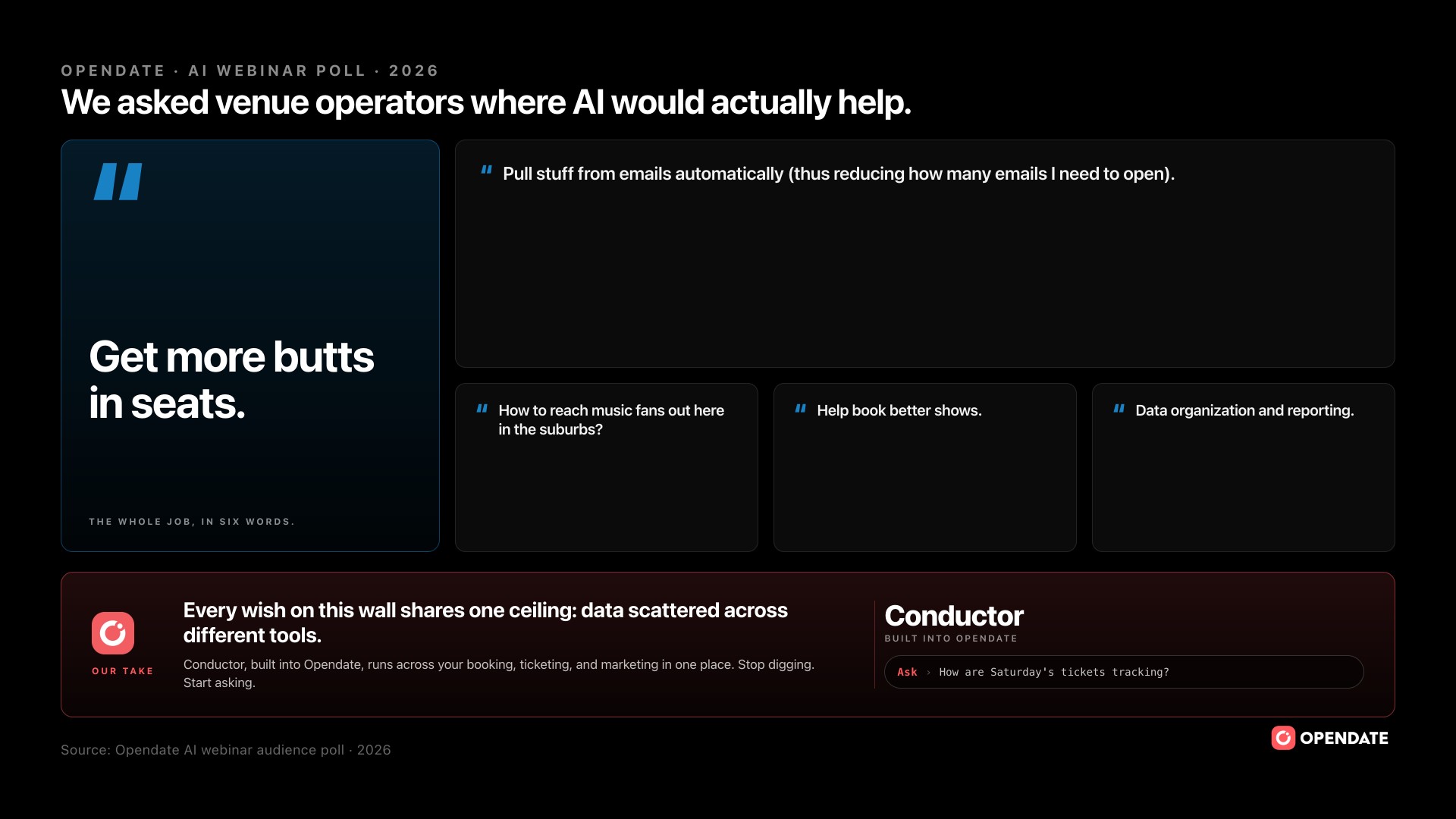
These are the real jobs venues want AI to do. Not write a poem. Not generate a logo. Sort the inbox, find the patterns in the data, and put more people in the seats.
This is exactly what we built Conductor to solve. It can be your data analyst, your marketing assistant, your operations secret weapon. It's built to empower your team, answer the unknown, and help your venue operate more efficiently and effectively. It's easy to get started...ask, approve, and act.
A few takeaways we'd hand to anyone in this position:
We'll keep running these polls. AI in live events is moving fast enough that what was true six months ago isn't true today — and the gap between operators who figure this out and operators who don't is going to show up in the P&L.
If you missed the webinar, the replay is available. And if you want to talk about where AI fits into your venue's stack, we're around.
Poll conducted live during Opendate's "Ready or Not: AI Is Already Changing the Live Events Business" webinar. Respondents were independent venue operators, talent buyers, and arts center leaders.