See how Opendate can help you manage the entire event lifecycle.
Let us know who you are to unlock the demo video.
Thank you! Your submission has been received!
Oops! Something went wrong while submitting the form.

















| Feature | Opendate | DICE |
|---|---|---|
| Booking calendar, avails | ✓ Multi-venue calendar. Avails you can paste to an agent | ✕ Not included |
| Date holds | ✓ Ranked holds that auto-promote, multi-date | ✕ Not included |
| Artist offers | ✓ Templates with splits, bonuses, comps, kills | ✕ Not included |
| Advance and run of show | ✓ Advance templates, guest lists, day-of detail | ✕ Not included |
| Artist settlement | ✓ One click, off the offer plus live counts | ✕ Not included |
| Show P&L | ✓ Forecast, actuals, tickets-to-breakeven before doors | ✕ Sales reporting and tracking links. No event-level cost or breakeven |
| Ticketing and entry | ✓ GA, add-ons, promo codes, mobile entry | ✓ Ticket tiers, presales, promotions, mobile entry. Parity |
| Seated and GA events | ✓ GA and reserved. Fully customizable seat maps you edit yourself | ✓ Seated and general admission events |
| Add-ons in the same cart | ✓ Tickets, add-ons, memberships, payment plans | ✓ Extras: VIP, queue jump, parking, food, drink, and merch. Parity |
| App discovery | ✕ No consumer app. Distribution pushes events to partner platforms | ✓ A recommendations engine puts your show in front of matching fans. Stronger |
| Where the ticket lives | ✓ Your checkout and the fan's email. Nothing to download, nothing to activate | ✕ Fans open the DICE app to reach the ticket, web purchases included |
| Fan questions and refunds | ✓ Your box office handles them, with the fan's full history on the record | ✓ DICE answers fans and processes refunds for you. Stronger |
| Fan CRM and owned channels | ✓ Genre, spend, automated segments. Email, SMS, push built in | ✕ Ticket holder data through an API, and a Mailchimp integration for email |
| Rentals and dark nights | ✓ Rental bookings, invoices, and artist contracts on the event you sell | ✕ Not included |



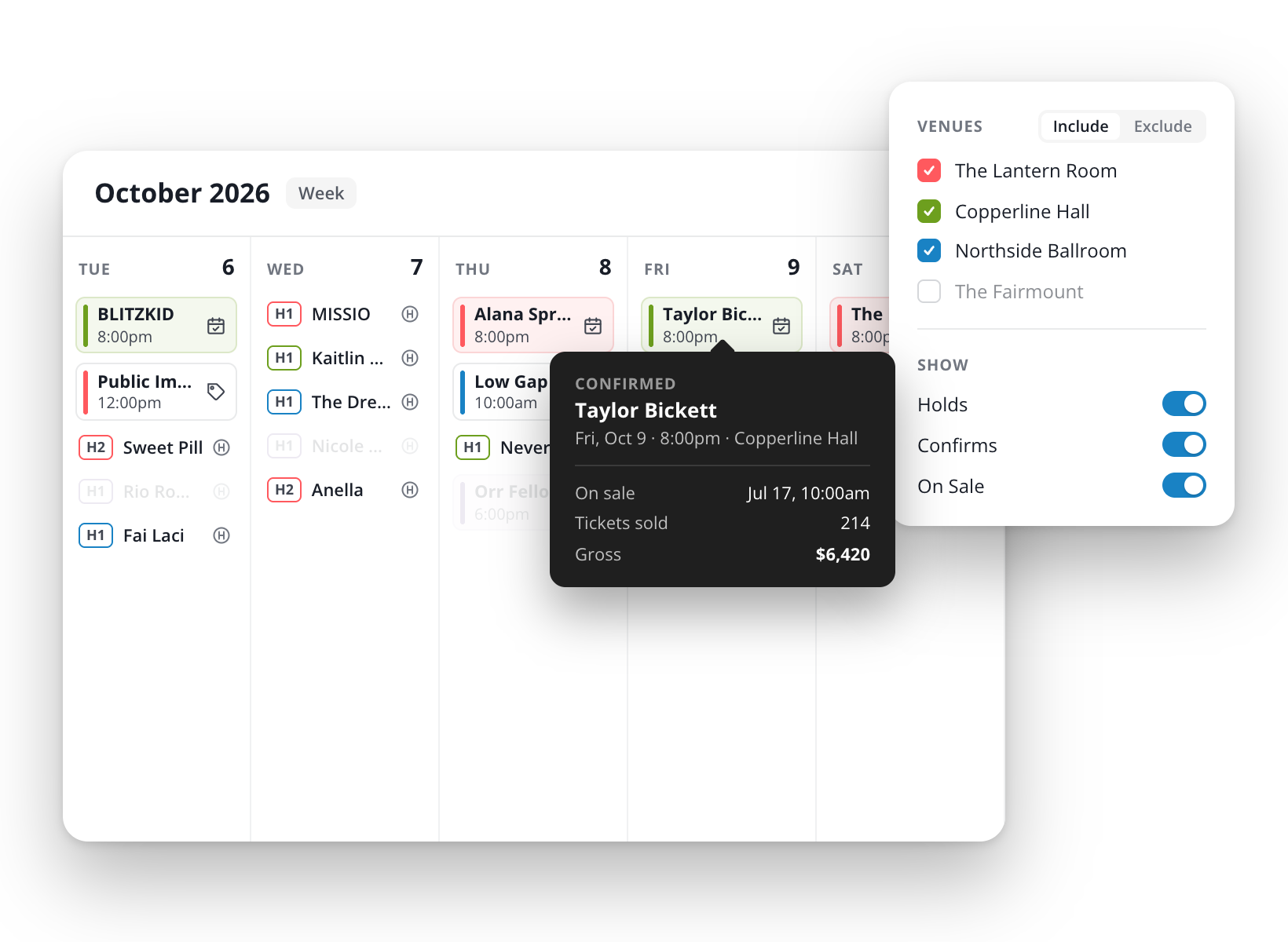
Avails, ranked holds, and the artist offer live on the record that sells the ticket, so the deal you sign carries its ticket types, comps, kills, and announce dates into the on-sale. DICE starts once the event exists, so someone builds the show by hand before a ticket goes up.
Advance templates go out from the show page, and guest lists, tech details, and day-of notes come back to it, so production, the box office, and the artist work from one version. DICE has no advance or run of show, so that coordination happens outside the system selling the ticket.
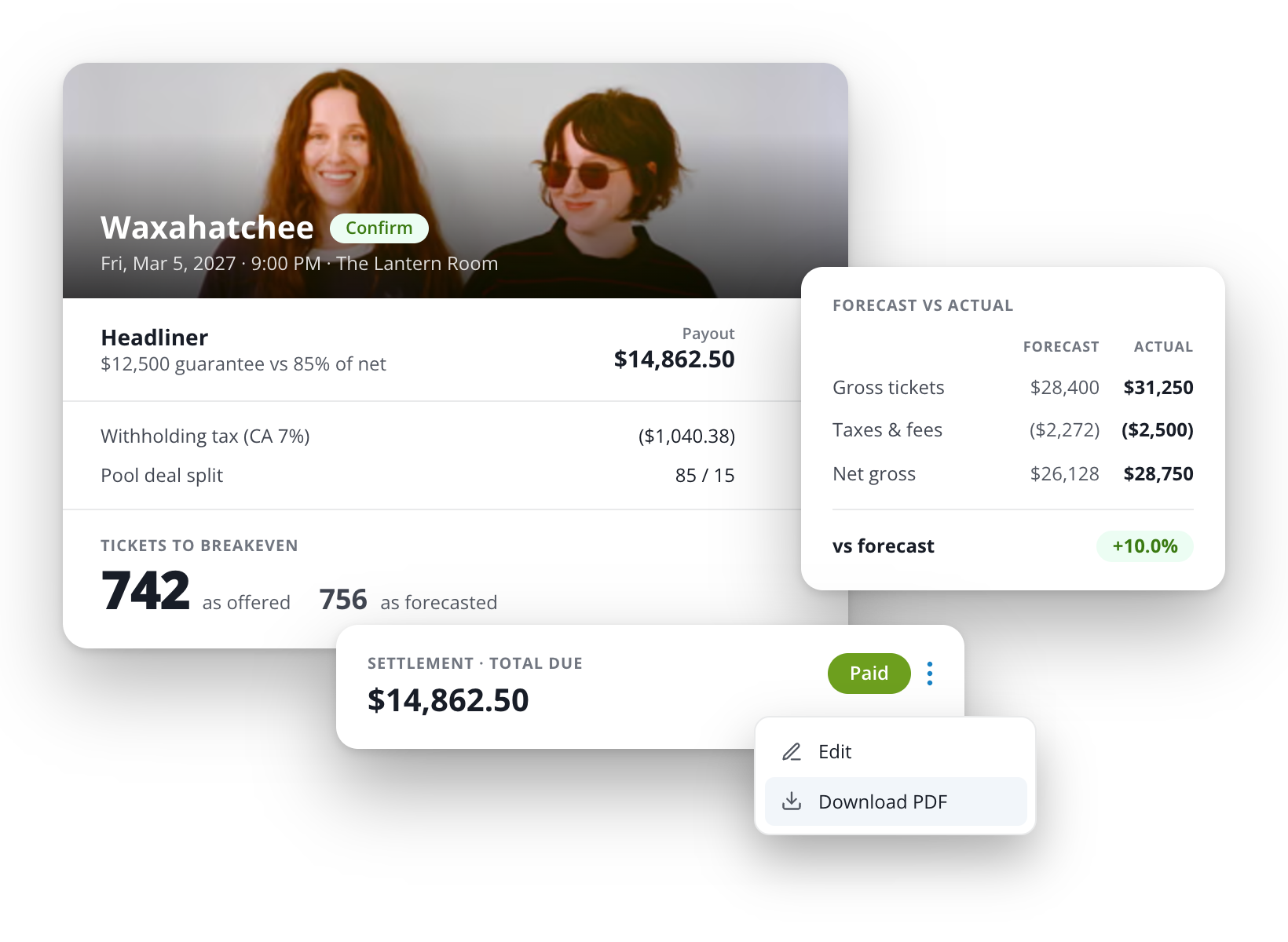
Splits, bonuses, and comps calculate against live door counts, off the offer you already agreed, so the artist signs before load-out. DICE ends at the sale and the scan, so the settlement happens wherever you keep your spreadsheets.
Forecast, actuals, and tickets-to-breakeven sit on the show page next to the offer, so you price the guarantee against the room. DICE reports sales and tracks where fans are buying from. Event-level cost, profit, and breakeven aren't part of it.



7 venues, 433 events, one platform. Unique fans up 531% at Hook & Ladder.
“Opendate has transformed our company. We are a better live event business than we were before Opendate.”
No. DICE runs from the event listing through discovery, checkout, entry, and fan support. A booking calendar, avails, ranked date holds, artist offers, the advance, and artist settlement aren't part of it. On Opendate all of that sits on the same record that sells the ticket, ten weeks before the on-sale.
You'd lose that app, and it's the strongest thing they have. DICE runs a personalized recommendations engine that puts events in front of fans who match them, and for a room still building an audience that reach is worth paying for. Opendate has no consumer app, so the honest comparison is between rented reach and a list you own. Opendate Distribution pushes your events out to partner ticketing platforms, and the fan who buys lands in a CRM you can sell the next show to.
In the DICE app. Their own help center walks a fan through buying on the DICE website and then opening the app to reach the ticket, and it asks fans to activate that ticket at least two hours before the show. The same design is what makes their protection against touts work, so treat it as a trade rather than a flaw. On Opendate the ticket arrives in the fan's email from your own checkout, with nothing to download and nothing to activate.
Both of you can reach it, and the difference is what happens next. DICE's partner API returns ticket holders with name, email, phone number, date of birth, address, survey answers, and marketing opt-in, with some fields marked restricted access. That data lands in your BI tool, or in a separate email platform through their Mailchimp integration. On Opendate the buyer arrives as a fan record carrying genre affinity, purchase history, and lifetime spend, and you segment and send from the same login that booked the show.
Through them, and then through a third party. DICE markets your event inside its own app, which is a channel most ticketing companies simply don't have, and that deserves credit. For your own sends, the documented route is a Mailchimp integration that imports fan contacts with purchase and demographic tags, alongside tracking links, QR codes, promotions, presales, and listings pushed out to Spotify and YouTube. The sending itself happens in Mailchimp. Opendate carries email, SMS, and push in the same subscription as the ticketing, scheduling off the confirmed offer.
Theirs, and it's good. Fans join a waiting list when a show sells out, DICE treats that as a demand signal you can plan the room against, and returned tickets go back out through the list. If your hardest problem is what happens after a show sells out, weigh that seriously. Opendate doesn't run a consumer waiting list.
Close to parity, with different reach. DICE Extras sells add-ons beside the ticket in their app: VIP upgrades, meet-and-greets, skip-the-line passes, parking, camping, food, drink, and merch. Opendate sells add-ons, memberships, and payment plans in the same cart as the ticket. Penrod sold VIP, merch, and parking on one ticket and grew 34% year over year.
Not on DICE. Their reporting covers sales, and tracking links show where fans are buying from, which is useful on announce week. Event-level cost, profit, and tickets-to-breakeven aren't part of it. Opendate puts forecast, actuals, and tickets-to-breakeven on the show page next to the offer, so you price the guarantee against the room before you confirm it.
Both do. DICE sells seated and general admission events. Opendate sells GA and reserved, with fully customizable seat maps your own team builds and edits, so you reconfigure the room the week you decide to rather than filing a request.
On DICE, DICE does. They take on ticket operations, fan questions, and refunds, and for a team of three that is real relief. On Opendate your box office answers, with the fan's full order and attendance history on the record in front of them. Decide which you want before you compare anything else, because it changes who your fans think they bought from.
Ask DICE for the full schedule, including payment processing, and hold it against ours. Opendate's tiers are public: Opener free, Marquee from $4K a year, and Headliner free with ticketing. All-In Pricing shows the fan the total before checkout.
Nothing on sale has to move. In-flight events sell through untouched, and the externally ticketed event type keeps your calendar and reporting whole through one overlapping on-sale cycle. Calendar import runs about a week, ticketing cuts over show by show, and your seat maps are yours to build and adjust as you go.
Then most of Opendate is overhead you won't use, and we'd rather say so. If the room is rented, the promoter brings the show, and your job is selling tickets and scanning them at the door, DICE covers that and brings its app audience on top. The case for Opendate starts the moment holds, offers, advances, and settlements become your problem, which for most rooms is sooner than they expect.